
Garment Trims at a Glance
Metal garment trims — jeans buttons, rivets, eyelets, cord ends, stoppers and metal labels — are small components that carry a brand’s identity and take daily mechanical abuse. Specify them by base material (brass or zinc alloy), attachment method, finish, and regulatory compliance (nickel release, REACH), then validate on the real garment fabric before production. Maya Metal manufactures custom metal garment trims with logo engraving and matched finishes for apparel and denim brands.
What Counts as Metal Garment Trims?
Metal trims are the functional and decorative metal components attached to clothing and soft goods. The main families are:
- Jeans buttons and rivets — the shank button at the waistband and the small rivets reinforcing pocket corners on denim and workwear
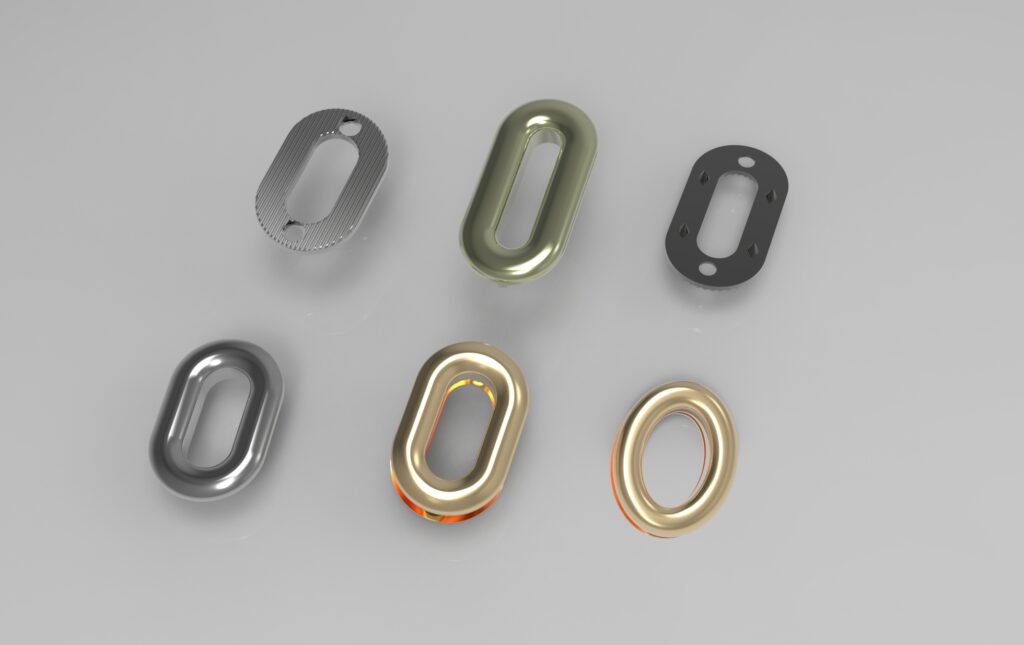
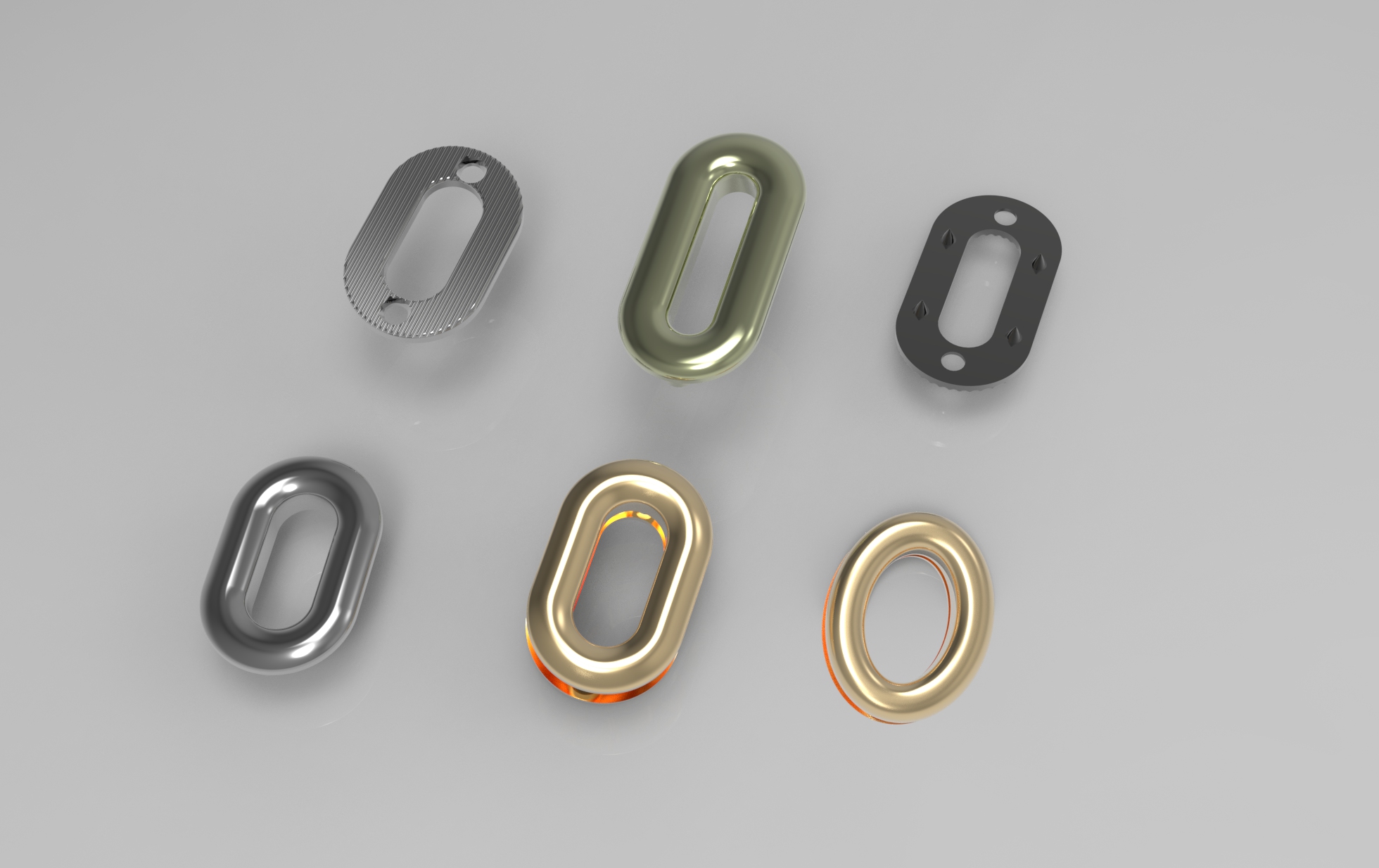
- Eyelets and grommets — metal rings that reinforce holes for laces, drawcords and ventilation on hoodies, jackets, shoes and bags
- Cord ends and drawstring tips — metal aglets and end caps that finish drawcords on hoodies, joggers and swimwear
- Cord stoppers and adjusters — spring or friction toggles that lock drawcords at length
- Metal labels and logo plates — sewn or riveted brand plates on jeans back patches, caps and outerwear
These parts are small, but customers touch them every time they wear the garment. A scratched cord end or a tarnished rivet reads as poor quality faster than almost any other defect.
How Should You Specify Jeans Buttons and Rivets?
A jeans button is a two-part system: the visible cap button and a tack (nail) that drives through the waistband and locks into the cap. Rivets similarly pair a cap with a burr or nail back. When specifying, define:
- Diameter and profile — standard jeans buttons run around 17–20 mm; rivets are typically 8–10 mm, with cap shapes from flat to domed
- Base material — brass for premium denim (takes engraving and plating well, resists rust), zinc alloy for complex cast shapes at lower cost
- Attachment strength — the tack must clinch firmly through the actual fabric stack; ask for pull-test results on your denim weight
- Logo treatment — embossed, debossed or laser-engraved artwork on the cap
The most common field failure is the button spinning or pulling out after repeated washing. That is a tack-to-cap fit problem, so approval samples should always be attached to production-weight fabric, then wash-tested.
How Do You Choose Eyelets and Grommets?
Eyelets are one-piece rings with a rolled barrel; grommets add a separate washer for heavier duty. Selection comes down to three decisions:
- Inner diameter — matched to the cord or lace that passes through, with enough clearance for smooth movement
- Material — brass is the default for corrosion resistance through laundering; stainless steel for swimwear and outdoor gear exposed to salt and chlorine; iron only when cost dominates and plating quality is guaranteed
- Setting method — hand press, kick press or fully automatic machines; confirm your factory’s tooling matches the eyelet’s barrel length for your fabric thickness
For colored finishes — matte black, gunmetal, antique brass — plating or coating must survive both abrasion from the cord and repeated wash cycles. Rub and wash tests on set samples are the cheapest insurance in the whole trim program.
What Should You Check on Cord Ends and Stoppers?
Cord ends (aglets) are crimped or screwed onto drawstring tips; stoppers use an internal spring to grip the cord. Key checks:
- Crimp strength — the end must survive a firm pull and repeated trips through the washing machine without slipping off
- Interior edges — no sharp points where the cord enters, which fray the cord over time
- Spring life on stoppers — cycle the toggle a few hundred times; grip force should not fade noticeably
- Weight and scale — an oversized zinc cord end on a lightweight hoodie cord pulls the garment out of shape
How Should Trims Meet Nickel-Free and REACH Requirements?
Metal trims sit against skin for hours, so EU-bound garments must control nickel release under REACH (EN 1811 testing applies to items in prolonged skin contact). Lead and cadmium limits also apply, and California Proposition 65 matters for the US market. The practical approach:
- Specify nickel-free or low-nickel-release plating systems at the order stage — retrofitting compliance after production is effectively impossible
- Ask the trim supplier for material declarations and recent third-party test reports for each finish family
- Keep finish recipes stable between seasons; a changed plating bath can invalidate last year’s test report
For a deeper look at nickel-free requirements, see our guide on nickel-free hardware and REACH compliance — the same rules apply to garment trims.
Garment Trims Sourcing Checklist
Before approving trims for production, check:
- Attachment samples set on production fabric, pull-tested and wash-tested
- Finish color and sheen against the approved master sample, matched across buttons, rivets, eyelets and metal labels in the same garment
- Edges and barrels free of burrs that could cut cord or irritate skin
- Nickel release / REACH documentation current for each finish in the order
- Setting tooling compatibility confirmed with the garment factory before bulk delivery
- Spare allowance — trims are small and losses happen; standard practice is to order a few percent over
Send us your trim list with target finishes and fabric types, and our team will quote matched sets — buttons, rivets, eyelets, cord ends and labels — from one finish family so the whole garment reads consistently.

