
Bag Feet at a Glance
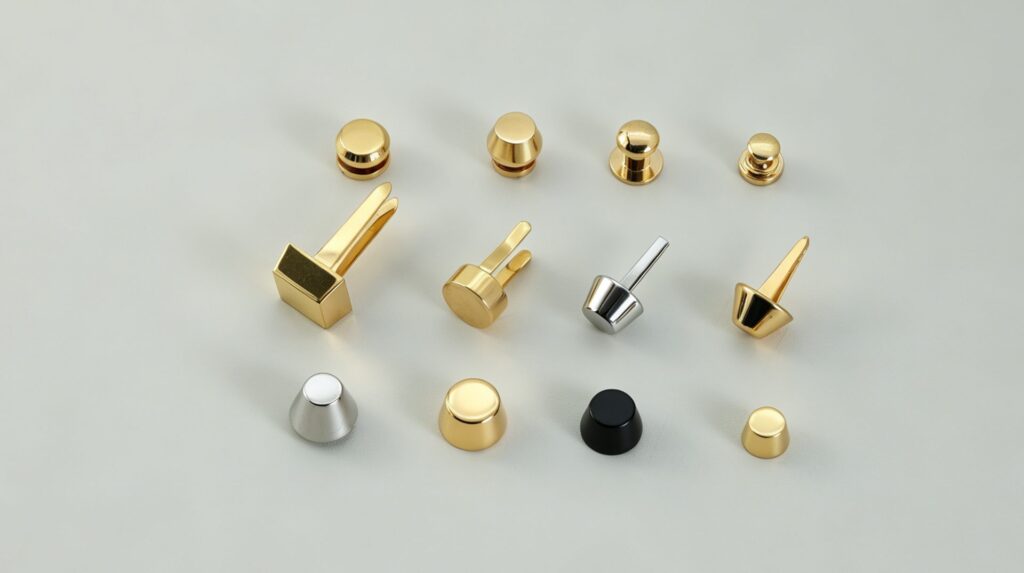
Bag feet should be designed by matching height, base size, attachment method, material, finish and bag base structure. Good bag feet protect the bottom of the bag without damaging leather or looking out of scale. Maya Metal manufactures custom metal bag feet and studs in stainless steel and brass for B2B OEM and ODM handbag, leather goods and luggage projects.
What Are Bag Feet?
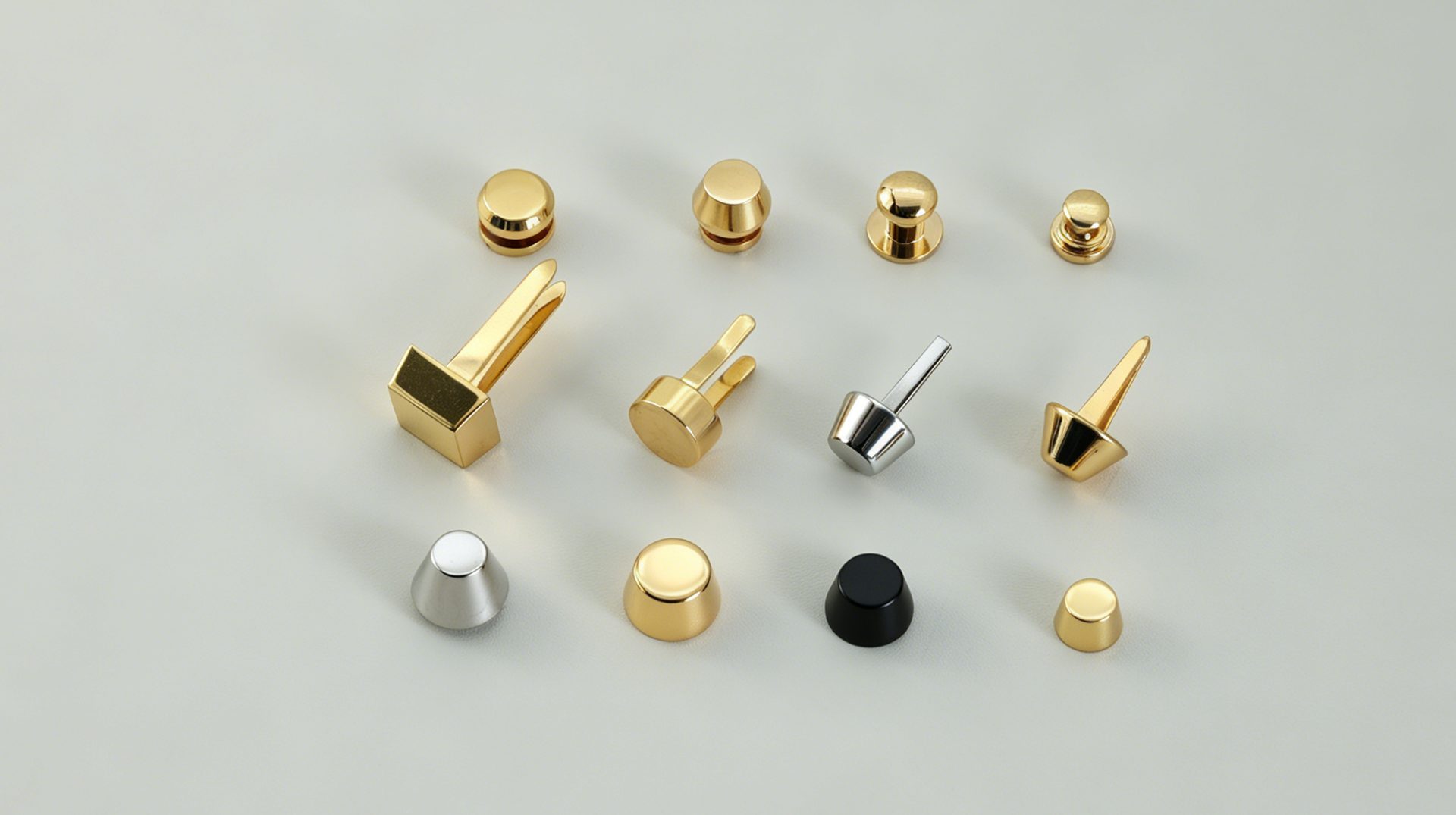
Bag feet are small metal fittings fixed to the bottom of a handbag, tote, briefcase or piece of luggage. They lift the bag body off the surface it sits on, which reduces scuffing, staining and corner wear on leather or fabric panels. On structured bags, feet also help the bag stand level and keep its shape during display and daily use.
From a sourcing perspective, bag feet are a small component with an outsized impact on perceived quality. A poorly finished foot can scratch leather, loosen over time or clash with the rest of the hardware set. Because feet touch the ground, they also see more abrasion than almost any other fitting on the bag, so material and finish decisions matter more than their size suggests.
How Do You Choose the Right Bag Feet Height?
Height selection starts with what the feet need to protect. A foot that is too low lets the bag base touch the surface, defeating the purpose. A foot that is too tall can make the bag unstable, change the silhouette and look visually heavy on small styles.
As a working rule, the foot height should clear the thickest point of the bag base, including any piping, stitching or base board edge. Buyers should also check how the bag behaves when fully loaded, since soft constructions compress under weight. The final height is normally confirmed with a physical sample on the actual bag prototype, because drawings alone rarely capture how the base flexes in use.
What Attachment Methods Are Used for Bag Feet?
Bag feet are attached in several common ways, and the right method depends on the bag base construction and production setup:
| Attachment method | How it works | Best suited for | Buyer check |
|---|---|---|---|
| Screw-back | A screw passes through the base into the foot | Structured bags with a firm base board | Screw length and base thickness must match |
| Prong / claw | Metal prongs pass through the material and fold over | Leather and fabric bases without a rigid board | Prong length and folding strength |
| Rivet or stud | The foot is fixed with a rivet or stud setting | Casual styles and visible stud designs | Setting tooling and pull-out resistance |
| Adhesive-backed | A pad or adhesive bonds the foot to the base | Prototypes or specialty constructions | Bond durability under load and temperature |
Whichever method is used, the attachment must not telegraph through the leather, cut into the base material or loosen with repeated setting-down impacts. Attachment samples should be tested on the real base material, not just on a swatch.
What Materials Work Best for Bag Feet?
Bag feet are commonly made from brass or stainless steel. Brass feet suit designs that want a heavier, traditional luxury feel and polished or plated decorative finishes; see our guide to brass bag hardware options for alloy and plating detail. Stainless steel feet suit designs that prioritize corrosion resistance and long-term durability, especially on bags that will sit on damp or rough surfaces.
Material choice also interacts with weight. Four large solid metal feet add noticeable weight to a handbag, so buyers should weigh the complete hardware set during development rather than treating each part in isolation. The material decision should be made together with the rest of the hardware set so color, weight and finish stay consistent.
How Should Bag Feet Finish Match the Rest of the Hardware?
Bag feet sit low on the bag but remain clearly visible, so their finish should match the locks, buckles, rings and other fittings covered in our complete handbag hardware category guide in color and sheen. A polished gold-tone foot next to a brushed gold-tone zipper puller reads as a mismatch at retail.
Because feet are ground-contact parts, finish durability matters as much as color. Plated and polished finishes can show abrasion faster on feet than on decorative parts, so compare hardware surface finish options for durability, not just color. Buyers should confirm the finish on a physical sample and compare it side by side with the other hardware under the same lighting before approving production.
Bag Feet Inspection Checklist
Before approving bag feet for mass production, buyers should check:
- Overall dimensions, height and base diameter against the approved drawing or sample
- Attachment strength on the real bag base material, including pull and wobble checks
- Edges and underside for burrs that could scratch leather or flooring
- Finish color and sheen against the approved master sample and the rest of the hardware set
- Surface for scratches, pits, plating defects or polish lines
- Weight of the complete set against the design target

