
Custom Zipper Pullers: The Short Version
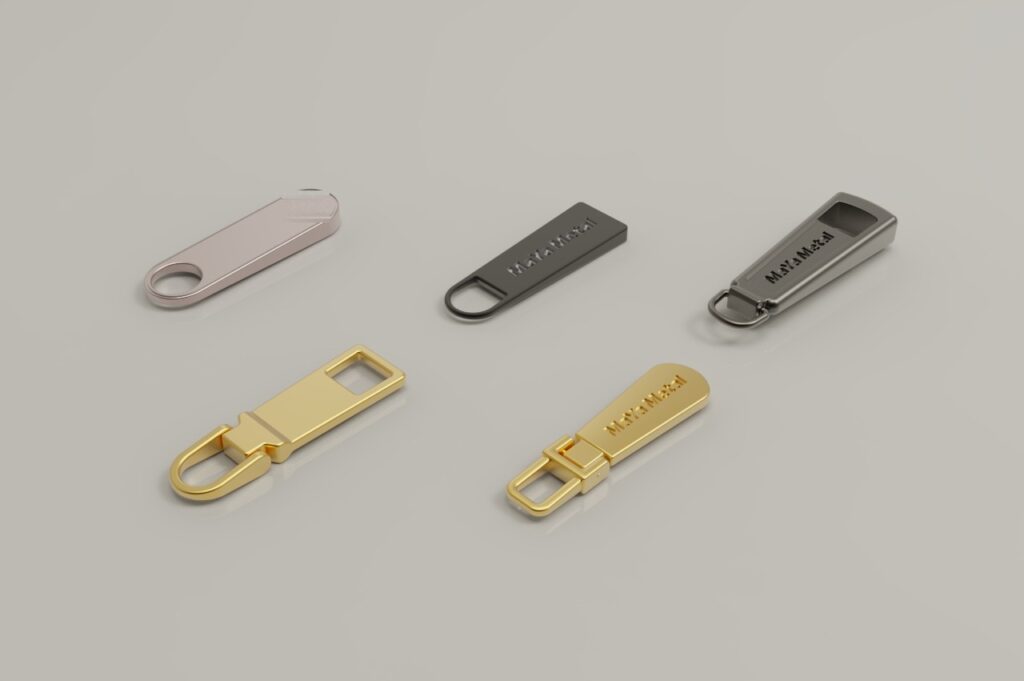
Custom zipper pullers are the smallest branding surface on a bag and one of the most touched: a puller carrying your logo gets handled every time the bag opens. The standard route is a zinc alloy die-cast puller with an engraved or embossed logo, finished to match the rest of the hardware; stamped brass suits flat, crisp designs and molded or leather pulls suit casual lines. Specify the puller by attachment size (matched to the zipper gauge), logo process, finish and a cycle-test requirement, and approve a physical sample before production. Maya Metal produces custom zipper pullers from artwork or STEP files, color-matched to the locks, rings and chains of the same collection.
What Construction Routes Are Available for Custom Pullers?
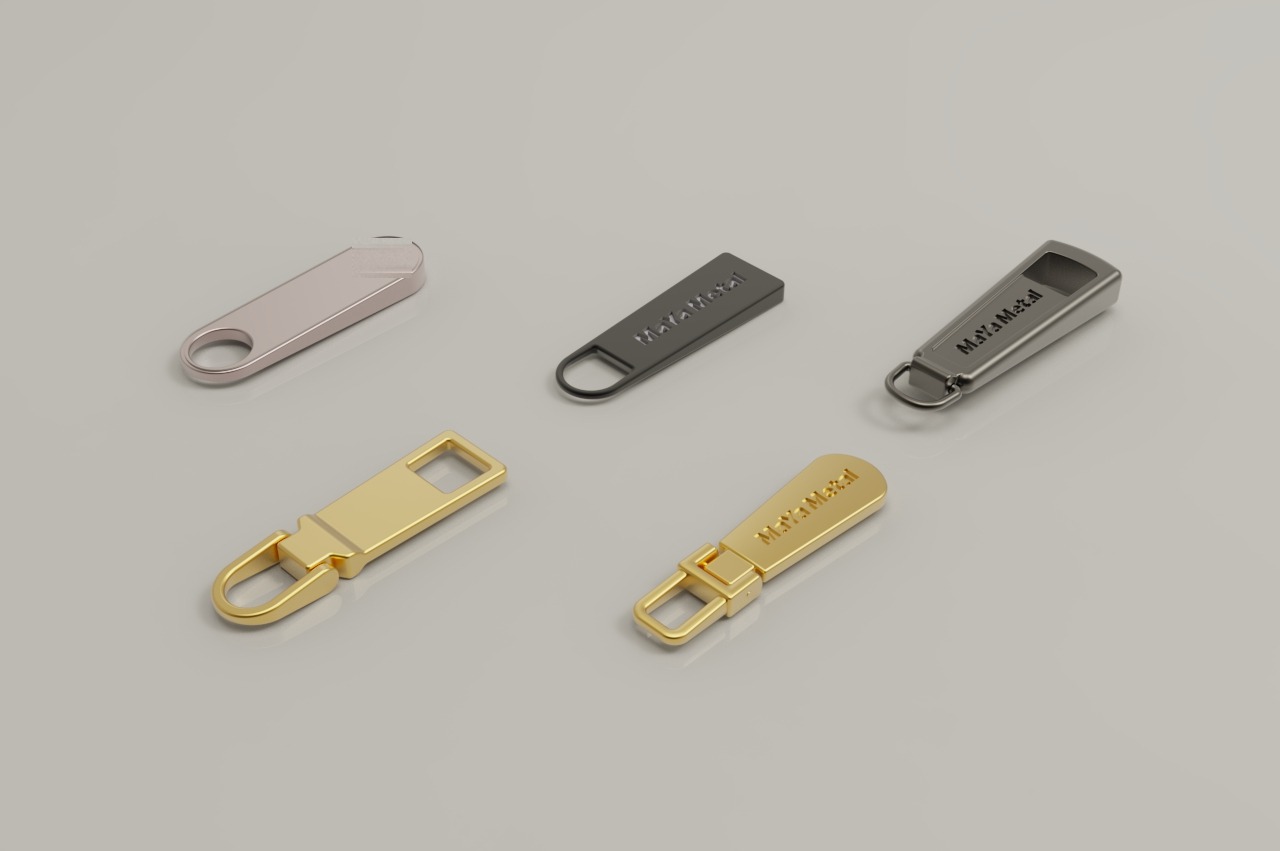
- Die-cast zinc alloy — the default for three-dimensional, sculpted pullers: rounded shapes, relief logos, branded characters. Tooling cost is moderate and unit price drops fast with volume; see our die casting vs. stamping guide for the underlying trade-offs
- Stamped brass or stainless steel — flat or gently bent pullers with sharp engraved or embossed detail; crisper edges than casting, and the wrought metal suits slim, strong designs
- Molded and soft pulls — TPU, rubber or woven cord pulls for sports and casual bags; light, quiet and cheap, but they carry color rather than metal finishes
- Leather-wrapped or hybrid pulls — a metal core with a leather tab, matched to the bag’s leather; common on premium casual and heritage styles
How Is the Logo Applied to a Puller?
The logo process is usually decided by the construction, not the other way round:
- Engraving / embossing in the mold — cast and stamped pullers carry the logo directly from the tooling; zero extra process cost, and the logo lasts the life of the part. This is the standard choice
- Laser engraving — post-finish marking on flat metal surfaces; good for serialization and small runs, shallower than mold engraving
- Enamel fill — colored enamel set into engraved recesses; adds brand color and protects the logo from wear, at added unit cost
- Printed or epoxy-dome logos — budget route for molded pulls; the surface logo wears first, so avoid on high-touch premium bags
For a broader view of logo techniques across hardware types, see our guide to custom engraved metal logo hardware.
What Specs Matter When Ordering Custom Pullers?
- Attachment opening — the eye or hook must fit the zipper slider it mounts on: No. 3, No. 5 and No. 8 sliders have different lug sizes. State the zipper gauge, or send the slider
- Pull length and grip — a main-compartment pull needs a full finger grip (typically 30–45 mm); pocket pulls run smaller. Oversized pulls snag and add weight
- Weight — pullers hang at the end of a moving slider; heavy cast pulls slap and wear the tape. Keep main pulls light, and see our weight reduction guide if the bag has a hardware weight budget
- Edge quality — every edge that can touch leather, fabric lining or skin must be deburred and polished; pullers are handled more than any other fitting
- Finish match — pullers read against the zipper teeth and the bag’s other metal; finish them in the same batch or against the collection’s master sample
- Durability tests — specify a cycle test on the mounted pull (open-close cycles on the actual zipper) plus sweat and corrosion requirements consistent with the rest of the hardware
How Do MOQ, Tooling and Sampling Work?
A new die-cast puller means a mold: expect tooling cost and two to four weeks for the mold and first samples, with production minimums typically starting in the low thousands [按实际]. Stamped and laser-engraved routes tool up cheaper and suit smaller runs. A practical sampling path: approve a 3D render first, then a physical sample on the actual zipper, checking grip feel, logo depth and finish against the hardware master — only then release mass production. Artwork as vector files (AI/EPS/PDF) is enough to start; 3D files speed up sculpted designs.
Custom Puller Sourcing Checklist
Before approving custom pullers for production, check:
- Fit on the actual slider — mounted, slid and pulled through a full open-close cycle
- Logo legibility at real size: hold the sample at arm’s length, because a puller logo lives at 25–40 mm
- Finish match against the zipper teeth and the collection’s hardware master under daylight
- Edges and the attachment eye free of burrs, checked by running a finger and a lining-fabric swatch over them
- Weight of the pull recorded against the bag’s hardware budget
- Cycle, sweat and corrosion test requirements written into the PO, matching the rest of the hardware spec
Send us your logo artwork, zipper gauges and target quantities — our team will recommend the construction route, quote tooling and produce samples mounted on your actual zippers.

