
Ring Sizing in Brief
D-ring and O-ring sizing for bags comes down to three numbers: inner width matched to your strap (a 25 mm strap takes a 25 mm ring), wire gauge matched to the load (3–5 mm for handbags, heavier for luggage), and a construction matched to stress — welded rings at load-bearing points, cast or unwelded only for decoration. Most handbag programs settle on 20–38 mm inner width with 3.5–4.5 mm wire in welded brass or stainless steel. Maya Metal manufactures D-rings and O-rings across this full range and advises on sizing at quoting stage.
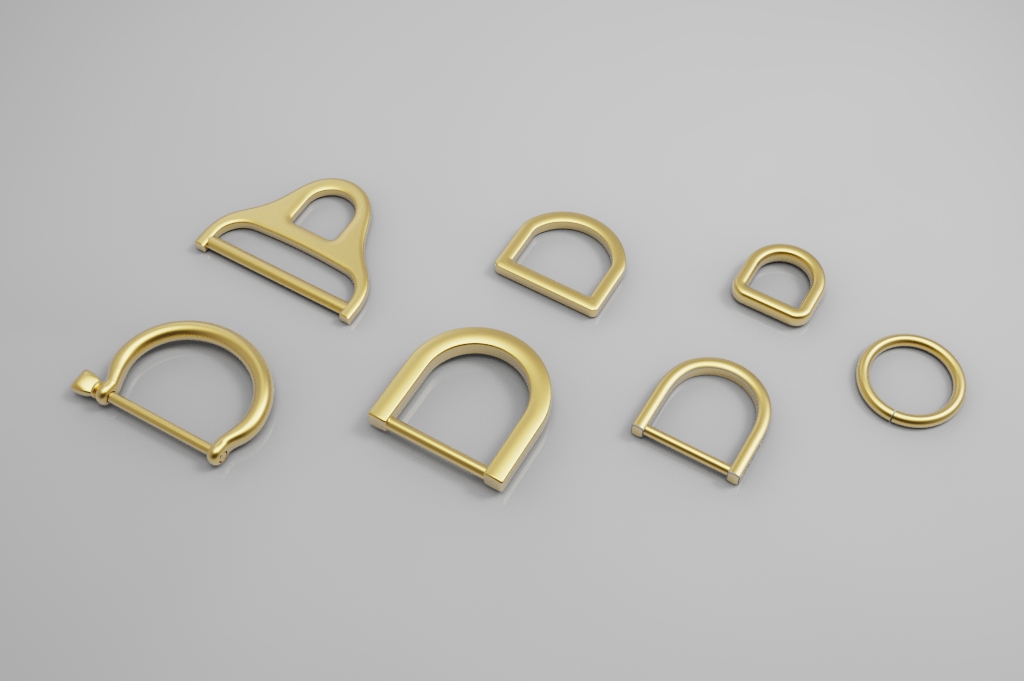
How Is Ring Size Measured — and Why Do Buyers Get It Wrong?
Rings are specified by inner width: the clear opening the strap passes through, not the outer dimension of the metal. A “25 mm D-ring” accepts a 25 mm strap. The most common ordering mistake is measuring an old ring’s outside edge and ordering that number — the resulting rings arrive a full wire-gauge too large on each side and the strap swims in them.
Tolerance matters too. Inner width should exceed strap width by no more than about 1–2 mm: tighter, and thick or edge-painted leather binds; looser, and the strap wanders sideways, twists the ring, and looks unengineered. When the strap doubles up at the attachment — a folded tab through the ring — measure the folded stack, not the single strap.
What Inner Widths Do Common Bag Styles Use?
- 15–20 mm — wristlets, small pouches, wallet chains, lightweight crossbody straps
- 25 mm (1″) — the standard handbag strap width; the highest-volume ring size in the industry
- 32 mm (1-1/4″) — wider shoulder straps, tote handles, camera-bag style builds
- 38 mm (1-1/2″) — duffels, weekend bags, wide guitar-style straps
- 50 mm and above — luggage, sports bags and technical gear, usually paired with heavier wire and welded construction
O-rings follow the same inner-width logic; their round shape suits rotating attachments like chain-strap connectors, while D-rings keep a strap lying flat against the bag body — the flat bar takes the webbing, the curve takes the clasp.
How Do You Match Wire Gauge to Load?
Wire gauge — the diameter of the metal the ring is formed from — is the strength variable. Typical pairings:
- 2.5–3 mm — decorative use, key leashes, light pouch attachments
- 3.5–4.5 mm — the handbag standard; a 4 mm welded brass or steel ring handles daily shoulder-bag loads with a wide safety margin
- 5–6 mm — duffels, luggage and pet gear, where a dynamic load (a swinging bag, a lunging dog) multiplies the static weight
When in doubt, test rather than guess: a pull test on the actual ring, in the actual material, at the actual weld tells you more than any table. For programs with a defined load rating, specify the test force in the purchase order and ask for the data — the same discipline as specifying corrosion testing.
Welded, Cast or Unwelded — Which Construction Where?
- Welded rings — formed from wire or bar, then joined with a weld that is ground smooth; the default for any load-bearing point, because the ring cannot spring open under tension
- Cast rings — zinc alloy cast in one piece with no joint; strong enough for many uses and available in shaped profiles, but zinc bends under overload, so keep cast rings off critical strap points on heavy bags (see die casting vs. stamping for the material logic)
- Unwelded (open-joint) rings — the cheapest option; the butt joint can pry open under side load, so restrict these to decorative connections, key fobs and internal tethers
Ring Sizing: What to Confirm Before Ordering
Before approving rings for a production run, check:
- Every ring specified by inner width, verified against the actual strap — including folded-tab stacks where the strap doubles up
- Wire gauge stated per ring position, with heavier gauges reserved for genuine load points rather than applied everywhere (gauge drives weight — see our weight reduction guide)
- Welded construction confirmed at all strap and handle attachments; unwelded rings quarantined to decorative roles
- Finish matched across rings, clasps and chain from the same batch or master sample
- Sample pull test on the complete attachment — ring, tab, rivets — since the joint usually fails before the ring does
Send us your strap widths, bag style and target loads — our team will recommend inner widths, wire gauges and constructions per position and produce samples on your actual webbing or leather.

