
Gold Plating in a Nutshell
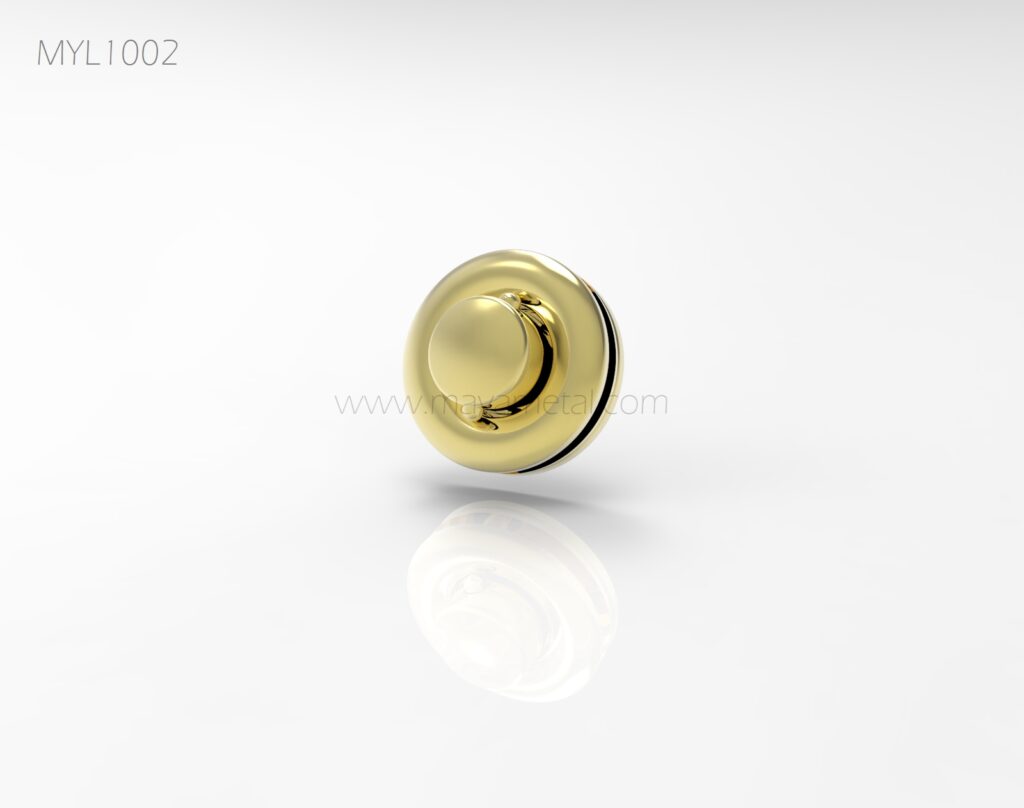
Gold plated bag hardware is produced two ways: traditional electroplating deposits a thin gold layer in a wet bath, while PVD gold bonds a hard, gold-colored film onto the part in a vacuum chamber. For bags in daily use, PVD gold on stainless steel is the durable premium option; electroplated gold on brass gives richer color depth at lower cost but needs more protection against sweat and abrasion. Maya Metal produces gold-finish handbag hardware in both systems, color-matched across locks, rings, chains and logo plates.
What Does Gold Plated Actually Mean on Bag Hardware?
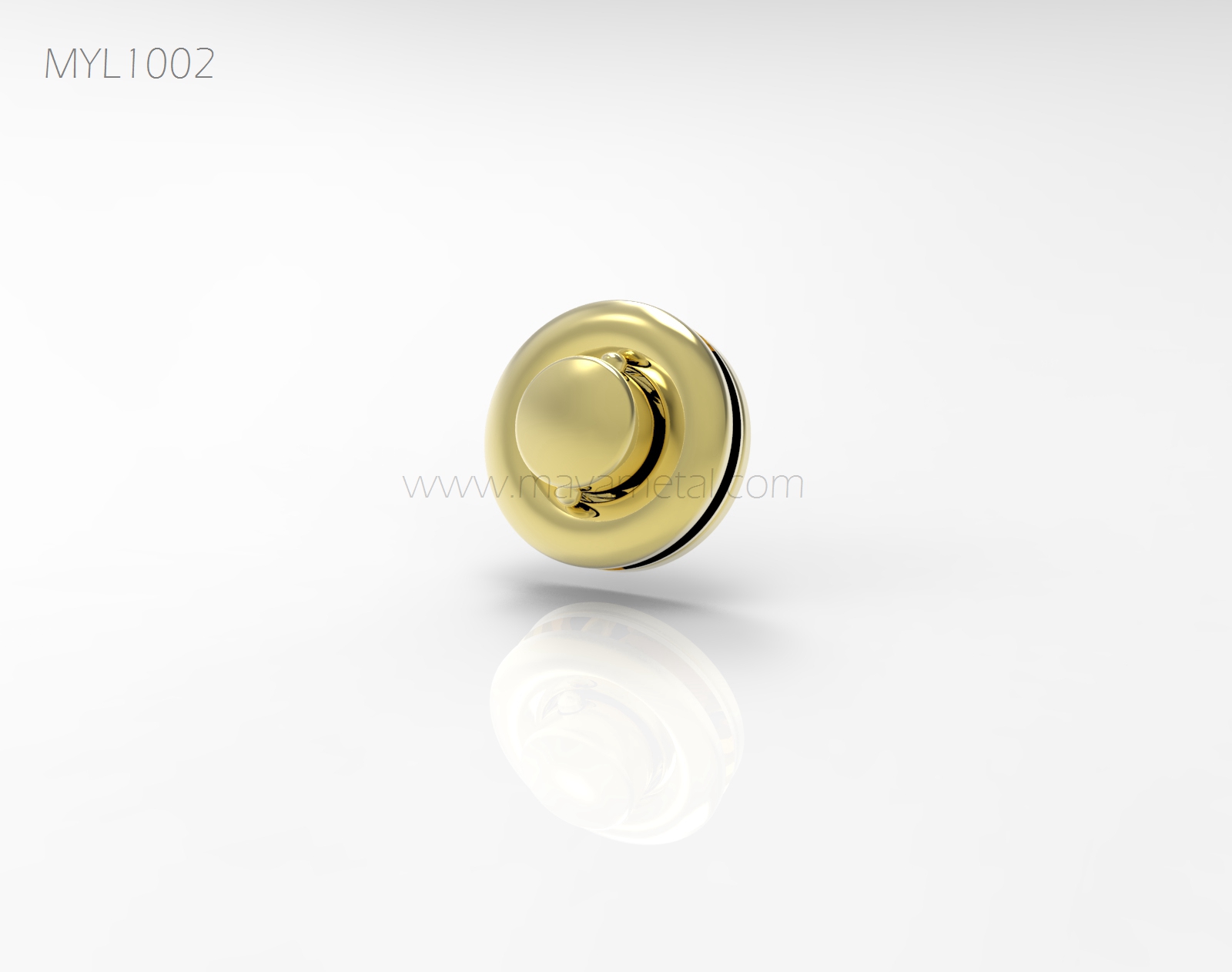
Almost no bag hardware is solid gold. The gold you see is a surface layer over a base metal — typically brass, stainless steel or zinc alloy. Two technologies dominate:
- Electroplated (wet-plated) gold — parts are cleaned, given nickel or copper undercoats, then passed through a gold bath where electric current deposits the gold layer; thickness is measured in microns
- PVD gold — in a vacuum chamber, titanium-based material is vapor-deposited and reacts to form a hard gold-tone film that bonds to the surface at the atomic level; the color reads as gold, but the film is a ceramic-hard compound
Both systems can be sealed with a clear lacquer or e-coat top layer, which adds chemical resistance at a small cost to the depth of the metallic look.
How Does PVD Gold Compare with Electroplated Gold in Daily Use?
Wear and scratching. PVD films are several times harder than plated gold and resist keys, zippers and desk edges far better. Electroplated gold is soft; on high-touch parts like turn locks and zipper pullers it will show burnishing within months unless protected.
Sweat and tarnish. Hand sweat is salty and mildly acidic, and it is the main killer of gold finishes on handles and clasps. PVD is chemically inert and shrugs it off. Electroplated gold relies on its undercoat and top lacquer; once the thin gold layer pores through, sweat attacks the nickel beneath and the part darkens or peels.
Fading and color stability. PVD color is extremely stable under UV and heat. Electroplated gold can shift tone as the top layer wears and the undercoat shows through — the brassing effect that vintage buyers know well.
Cost and minimums. Electroplating is cheaper per part at small volumes and a plated part can be stripped and re-finished if a batch goes wrong. PVD runs need chamber time and fixturing, so unit cost is higher and small batches carry setup charges — but a properly specified PVD finish rarely comes back as a quality claim, which is where the real cost of cheap gold plating hides.
For a process-level comparison, see our guide on PVD coating vs. electroplating for bag hardware.
How Do Thickness and Base Metal Affect the Gold Finish?
For electroplating, thickness is destiny. Flash plating under about 0.1 micron is display-only; functional bag hardware typically needs 0.2–0.5 microns of gold over a sound undercoat, with premium programs going higher on touch points. Specify thickness in the purchase order — gold plated alone is not a specification.
The base metal shapes what the finish can survive:
- Brass — the classic substrate for gold plating; the warm base hides thin spots and suits wet plating, but brass exposed by wear will tarnish dark
- Stainless steel (304) — the ideal PVD base: hard, corrosion-proof even if the film is scratched through, and dimensionally stable in the vacuum process
- Zinc alloy — plates well but corrodes fast once the coating fails; acceptable for low-touch decorative parts, risky for clasps and rings
How Should You Specify Gold Plating to Your Supplier?
A gold finish brief that survives production contains:
- Process — PVD or electroplated, stated explicitly per component group
- Color reference — a physical master sample or agreed tone (light gold, champagne, 24K-tone); gold alone spans a dozen shades
- Thickness and undercoat — microns of gold plus the undercoat system for plated parts
- Performance tests — salt spray hours, artificial sweat test and abrasion cycles agreed before sampling
- Top coat policy — lacquer or e-coat, since it changes both durability and appearance
- Batch consistency — all components of one bag finished in the same batch or against the same master, so lock, rings and chain read as one color
Gold Plating Sourcing Checklist
Before approving gold hardware for production, check:
- Written specification of process, thickness and undercoat — not just a finish name
- Sweat and salt spray test results on the actual base metal and finish combination
- Color match of samples against the master under daylight and store lighting
- Wear simulation on moving parts — lock buttons, zipper pullers, chain links — where friction concentrates
- Edge and recess coverage, since plating thin spots hide in engraving grooves and hinge areas
- Packing that prevents part-on-part scratching in transit, because gold finishes show every rub mark
Send us your target gold tone and component list — our team will recommend PVD or electroplating per part, produce matched samples across the full hardware set and quote with test requirements built in.

