
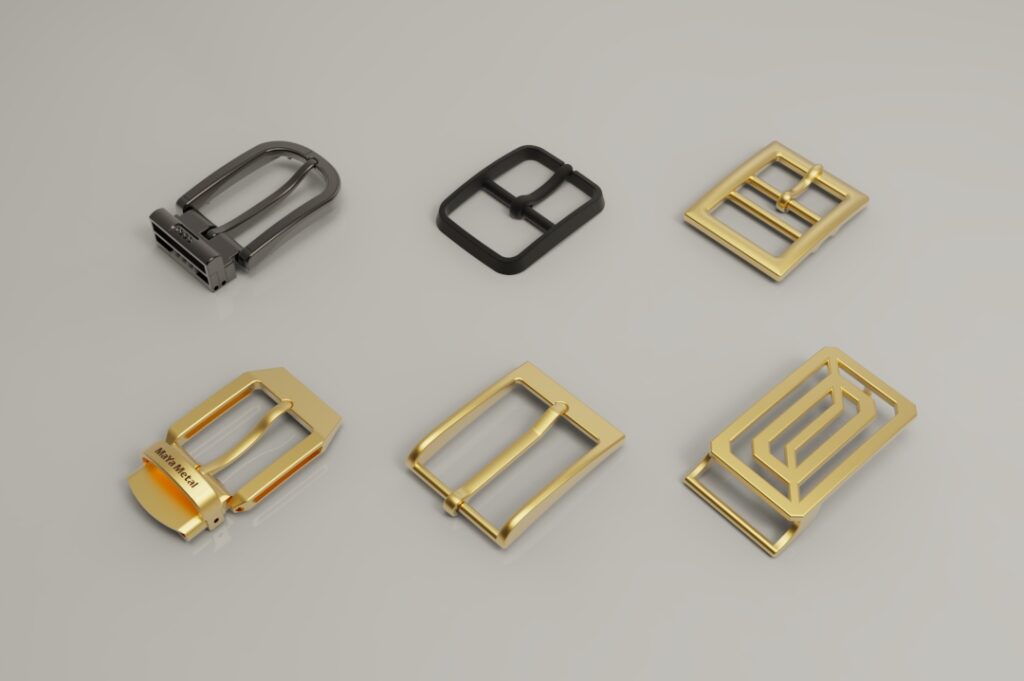
Bag Buckles: The Short Version
Buckle hardware for bags should be selected by strap width, frame shape, pin structure, material, finish and edge quality. A good buckle fits the strap, moves cleanly and does not damage leather during normal use. Maya Metal manufactures custom metal buckles for bags in stainless steel and brass for B2B OEM and ODM handbag, leather goods and luggage projects.
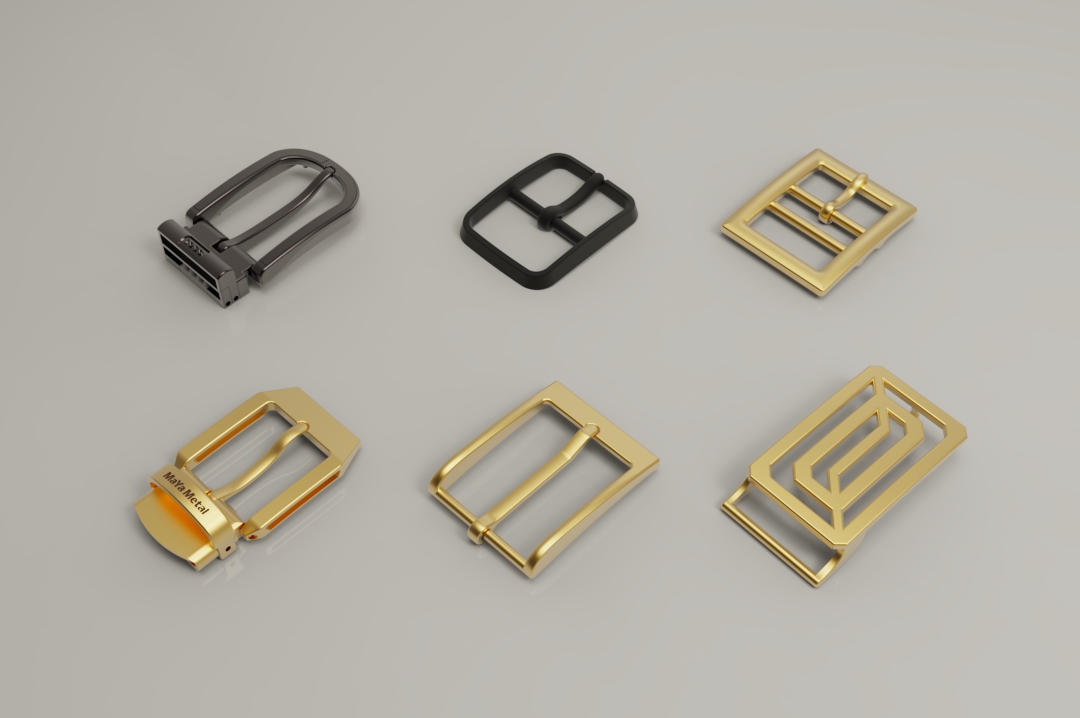
What Types of Buckles Are Used on Bags?
Bag buckles fall into a few functional families. Pin buckles, like belt buckles, use a frame and a pin that passes through a hole in the strap to set the length. Center-bar and double-bar buckles add a stabilizing bar across the frame for wider straps. Roller buckles include a rolling bar so the strap slides through with less friction and less leather wear.
There are also non-pin styles. Side-release and clip buckles appear on casual and travel bags, magnetic and hook-style closures blur into the lock category, and slide adjusters handle length changes without holes, though strap sliders and loops are usually treated as their own hardware family. Choosing the right type starts with what the strap needs to do: fixed-length closure, adjustable length, quick release or decoration.
How Should a Buckle Fit the Strap?
Strap fit is the most common buckle sourcing error. The buckle's inside width must match the strap width closely: too narrow and the strap will not pass, too wide and the strap slides sideways and looks sloppy. Buyers should measure the finished strap, including edge paint and any folded or padded construction, rather than the raw leather width.
Thickness matters too. The gap between the frame and the bar must accept the strap's full thickness without forcing. For pin buckles, hole spacing on the strap and the pin position must work together so the strap sits flat and centered. All of this should be validated with the buckle sample on the actual production strap material, since leather thickness varies between hides and batches.
Why Does Pin Movement Quality Matter?
The pin is the working part of the buckle. It should pivot smoothly on its bar, sit securely in its resting position and engage strap holes without forcing. A pin that sticks, wobbles or sits crooked makes the bag feel cheap every time it is adjusted.
Pin attachment strength is a durability point. Pins that are loosely hinged can deform or detach under repeated use, especially on luggage and travel goods. Buyers should cycle the pin repeatedly on samples and check for hinge play, deformation and any sharp points where the pin tip meets the strap hole.
What Materials Are Best for Bag Buckles?
Bag buckles are commonly made from brass or stainless steel. Brass buckles suit designs that want premium weight, traditional luxury feel and polished or plated decorative finishes; the cost and durability trade-offs between solid brass vs brass-plated buckles are a common sourcing question here. Stainless steel buckles suit designs that prioritize strength, corrosion resistance and long service life, especially on straps and luggage hardware that see repeated adjustment.
The material decision should be made with the whole hardware set in mind. A buckle's color, sheen and weight should sit naturally beside the rings, hooks and locks on the same bag, and mixing base materials without a clear finish plan is a common cause of visible mismatch.
How Should Buckle Finish Match Other Hardware?
Buckles are usually placed at focal points on the bag, so finish consistency is highly visible. The buckle finish should match the rest of the hardware set in both color and sheen level: polished against polished, brushed against brushed.
Because buckles are handled constantly, finish durability matters. Plated and polished finishes on buckles experience finger contact, strap friction and desk contact. Buyers should approve the finish on a physical sample, compare the buckle finish options with the other fittings under the same lighting, and agree on abrasion expectations before mass production.
Buckle Inspection Checklist
Before approving buckles for production, buyers should check:
- Inside width and bar gap against the finished strap dimensions
- Pin pivot smoothness, resting position and hinge security
- Frame symmetry, casting or stamping quality and edge deburring
- Edges and pin tip for anything that could scratch or cut leather
- Finish color and sheen against the approved master sample and hardware set
- Surface for scratches, pits, plating defects or polish marks
- Function after repeated open-close and adjustment cycles

