
Stainless Steel Hardware in Brief
Stainless steel bag hardware is used when durability, corrosion resistance and long product life matter. Stainless steel is often suitable for D rings, hooks, buckles, strap parts and exposed luggage hardware, with polished, brushed or PVD finishes when suitable. Maya Metal manufactures custom stainless steel hardware for handbag, leather goods and luggage OEM/ODM projects.
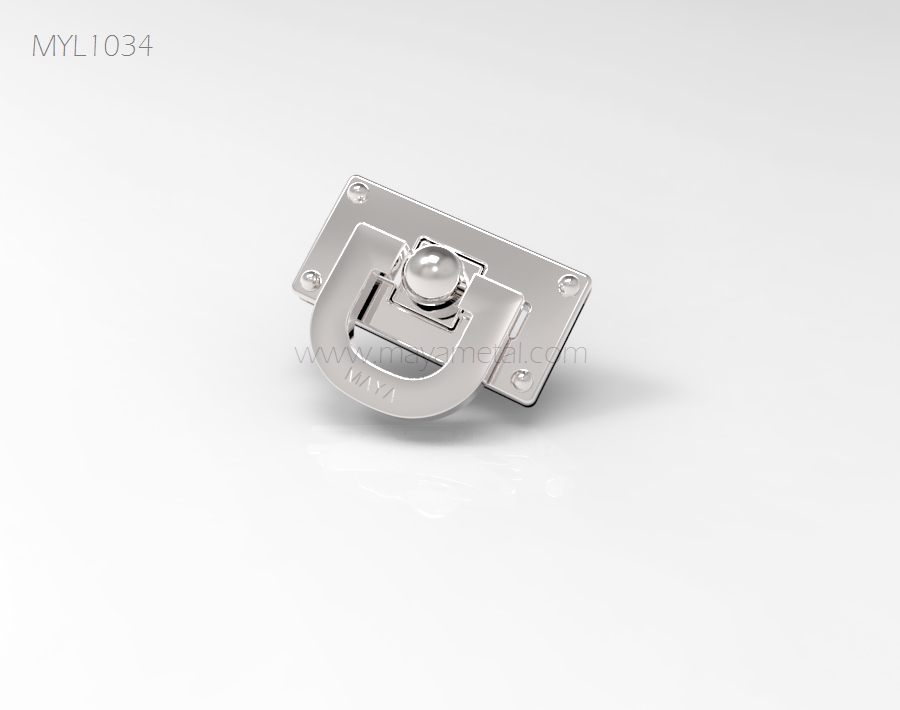
What Is Stainless Steel Bag Hardware?
Stainless steel is a family of chromium-containing steels that resist rust and corrosion far better than ordinary steel. In bag hardware, it is chosen for parts that must keep working and keep looking clean through years of handling, sweat, humidity and travel.
Unlike plated decorative metals, stainless steel's corrosion resistance comes from the material itself, not from a surface coating. A polished stainless D ring that gets scratched is still stainless underneath — the mark is cosmetic, not the start of rust. That property makes stainless steel the default choice for functional and exposed hardware.
Stainless hardware is typically produced by machining, stamping, wire forming or investment casting, depending on the part. Wire-formed rings and stamped strap parts suit simpler geometries, while casting handles more sculptural shapes. The production route affects cost, minimum quantities and achievable detail, so it is normally confirmed during drawing review.
Best Products for Stainless Steel
Stainless steel earns its place on parts that move, carry load or face the elements. Stainless steel D rings and O rings, stainless steel snap hooks and swivel hooks, buckles, sliders, strap adjusters and key rings are the classic applications — all parts that cycle constantly and are touched with bare hands every day.
Exposed luggage and travel hardware is another strong fit. Handle fittings, strap hardware and exterior attachment points on luggage face weather, airport handling and abrasion, where stainless steel's toughness pays off over the product's life.
| Product type | Why stainless steel fits |
|---|---|
| D rings and O rings | Load-bearing, constant strap movement, corrosion resistance |
| Snap hooks and swivel hooks | Spring and gate durability, daily handling |
| Buckles and sliders | Strength with clean movement on straps |
| Strap adjusters and loops | Wear resistance under friction |
| Exposed luggage hardware | Weather and rough-handling resistance |
| Key rings and holders | Long service life, nickel-stable surface |
For purely decorative centerpieces where weight and plated warmth define the luxury feel, brass is often the alternative — see the brass bag hardware guide and the comparison section below.
Finish Options
Stainless steel looks good with minimal finishing. A mirror polish gives a bright, cool, modern shine; a brushed or satin finish gives a softer, scratch-tolerant surface that suits contemporary bags. Because the base metal is corrosion resistant, these finishes need no plating to survive.
For color, PVD finishes for stainless steel — applied by physical vapor deposition — are the common route, producing gold-tone, black, gunmetal and similar finishes with good adhesion on a properly prepared surface. PVD on stainless steel is generally more durable than conventional plating on softer base metals, though performance still depends on surface preparation and process control and should be confirmed on samples.
Electroplating stainless steel is possible but more process-dependent than plating brass, and it is less commonly used than PVD for colored stainless hardware. Whichever route is chosen, finish samples should be approved physically, and wear behavior should be checked on the actual part geometry — edges and high-contact points wear first.
Stainless Steel vs Brass
| Criteria | Stainless Steel | Brass |
|---|---|---|
| Corrosion resistance | High, inherent to the material | Good with finish protection; tarnishes bare |
| Strength and durability | High; suits load and movement | Medium to high; suits decorative duty |
| Weight and feel | Solid but lighter-feeling, modern | Heavier, warmer, traditional luxury feel |
| Finish approach | Polish, brush, PVD | Polish, extensive plating options |
| Scratch consequence | Cosmetic only; metal is stable beneath | Can breach finish; base may tarnish |
| Best uses | Rings, hooks, buckles, strap and luggage parts | Locks, decorative details, premium centerpieces |
The choice follows the part's job. If the component is structural, moving or exposed — a D ring on a gym bag, a snap hook on a travel strap — stainless steel is usually the safer engineering decision. If the component is a tactile, decorative signature — the lock on a luxury handbag — brass often delivers the feel the brand wants.
Mixed sets are common and perfectly valid. The critical requirement is finish matching: a stainless PVD gold-tone ring and a brass plated gold-tone lock must be approved together so the whole set reads as one color.
Stainless Steel Quality Risks
The first risk is grade ambiguity. "Stainless steel" covers many grades with different corrosion performance, and the grade used should be stated in the specification — particularly for products sold into humid or coastal markets or exposed to sweat. Buyers should confirm the grade with the supplier rather than assuming it.
Surface quality is the second risk. Polishing marks, orange-peel texture on cast parts and inconsistent brushing direction are the defects that most often make stainless hardware look cheap. Samples should be inspected under bright diffuse light, rotated, so directional polishing flaws reveal themselves.
For PVD-finished parts, the risks shift to coating adhesion and edge wear. High-contact points — where a strap rubs a ring, where a hook gate closes — should be examined on samples, and the buyer should ask how the finish performs in abrasion and corrosion testing relevant to the product's use. Test expectations should be agreed before production, since performance depends on part geometry and finish system.

