
Brass Hardware: The Short Answer
Brass bag hardware is used when handbag designs need premium weight, polishability and decorative plated finishes. Brass is often suitable for bag locks, buckles, decorative feet and luxury hardware details, but tarnish control and finish protection should be confirmed before production. Maya Metal manufactures custom brass hardware for handbag, leather goods and luggage OEM/ODM projects.
What Is Brass Bag Hardware?
Brass is a copper-zinc alloy valued in bag hardware for its density, warm base color and excellent response to polishing and plating. Solid brass parts feel substantial in the hand — that heft is a large part of why brass is associated with traditional luxury hardware.
Brass hardware is produced through casting, stamping, machining or a combination, depending on the part's geometry. Complex three-dimensional shapes such as decorative locks and sculpted buckles are commonly cast, while flatter components can be stamped or machined from brass sheet or bar.
Because brass is relatively soft compared with stainless steel, it machines and polishes beautifully but also scratches more easily. The final performance of a brass part depends heavily on its surface finish system — plating, coating or lacquer — rather than on the bare alloy alone.
Best Products for Brass
Brass earns its place where weight, finish depth and decorative presence matter most. Brass bag locks are the classic application: a solid brass lock gives a handbag the tactile, mechanical quality that luxury buyers expect, and brass takes engraved logos and polished faces well.
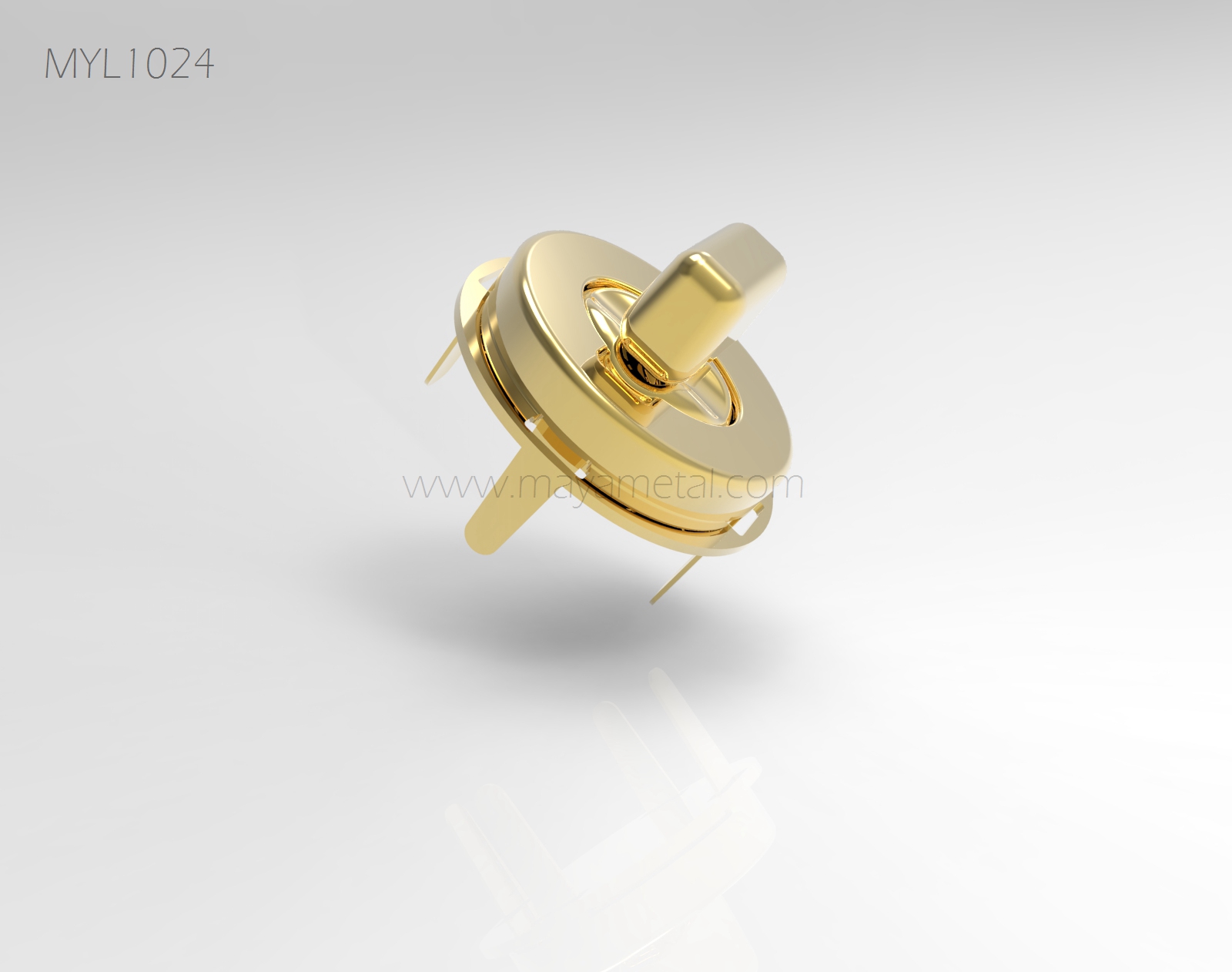
Custom brass buckles and decorative hardware are the next strongest fit. Frame buckles, magnetic closures, decorative feet, logo plates and trunk-style corners all benefit from brass's weight and its ability to hold crisp detail in casting.
| Product type | Why brass fits |
|---|---|
| Bag locks | Premium weight, smooth mechanisms, polished faces, engraving |
| Buckles | Warm feel, good plating base, decorative shapes |
| Bag feet and studs | Weight and stability, classic luxury look |
| Logo plates and tags | Sharp engraving, polished or plated detail |
| Decorative trunk hardware | Cast detail, traditional aesthetic |
For heavily load-bearing or corrosion-critical parts such as D rings and snap hooks on luggage, stainless steel is often the stronger choice — brass wins on feel and finish, not on raw structural duty.
Brass Finish Options
Brass is one of the most finish-friendly base metals in bag hardware, and the range of brass finish options is among the widest available. It can be polished to a mirror surface and left with a protective lacquer for a natural gold-brass look, or used as an excellent substrate for electroplated finishes: gold-tone, nickel-tone, gunmetal, antique brass, antique silver and more.
Antique finishes are a particular strength. Because brass itself has a warm tone, antique brass and brushed bronze finishes look authentic on brass parts — the darkened recesses and highlighted edges read as genuine aged metal rather than a surface effect.
Matte black and colored coatings are also possible, though they rely on the coating layer rather than the base metal for appearance. Whatever the finish, the protection system — plating thickness, top coat or lacquer — should be agreed at sampling, since it determines how the part ages in use.
Brass vs Stainless Steel
| Criteria | Brass | Stainless steel |
|---|---|---|
| Weight and feel | Heavier, warmer, more traditional | Lighter feel, clean and modern |
| Polishability | Excellent | Good |
| Plating suitability | Excellent substrate | Possible, more process-dependent |
| Corrosion resistance | Good with finish protection; can tarnish bare | High, even without coating |
| Structural strength | Medium to high | High |
| Best uses | Locks, buckles, decorative and premium details | Rings, hooks, exposed and moving parts |
The decision usually comes down to the part's job. If the part is a visible, tactile centerpiece — the lock a customer touches every time they open the bag — brass's weight and finish depth justify it. If the part works hard, moves constantly or faces sweat and weather, stainless steel's durability wins.
Many premium bags use both: brass for the lock and decorative set, stainless steel for the functional rings and hooks. Mixing is normal — the key is matching the finish color across materials so the set reads as one family.
Brass Quality Risks
The main risk with brass is tarnish. Bare or thinly protected brass oxidizes and darkens over time, especially with skin contact and humidity. A clear protective system — plating, top coat or lacquer — matched to the product's market and use conditions should be confirmed before production, not discovered after complaints.
Casting quality is the second risk area. Poorly cast brass parts can carry porosity — tiny internal voids that appear as pits or blisters after polishing and plating. Buyers should inspect polished samples closely under good light for surface pits, and check that plating adhesion is verified on cast parts.
Finally, confirm what "brass" means in the quote: solid brass vs brass-plated hardware are very different products at different prices. Solid brass can be verified by weight, by an exposed cross-section at a hidden point, or by material confirmation from the supplier. The distinction should be explicit in the specification.

