
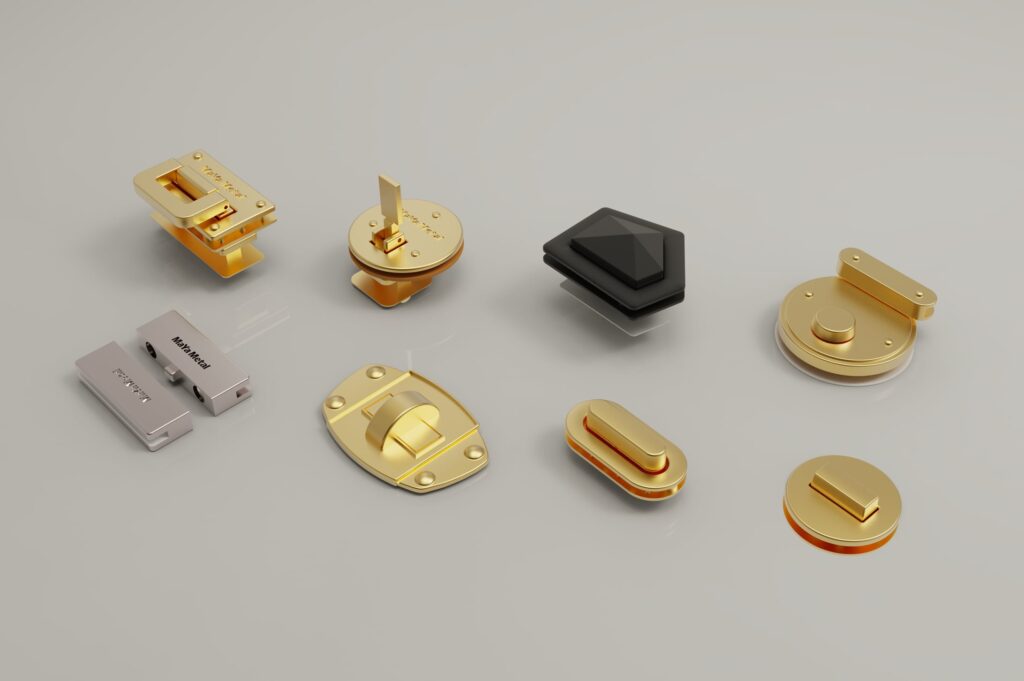
Handbag Hardware at a Glance
Handbag hardware includes the metal parts used to close, attach, protect, adjust and decorate handbags. Core categories include locks, D rings, hooks, chains, bag feet, buckles, strap hardware and logo hardware. Maya Metal manufactures custom handbag hardware products in stainless steel and brass for B2B OEM/ODM projects serving handbag, leather goods and luggage brands.
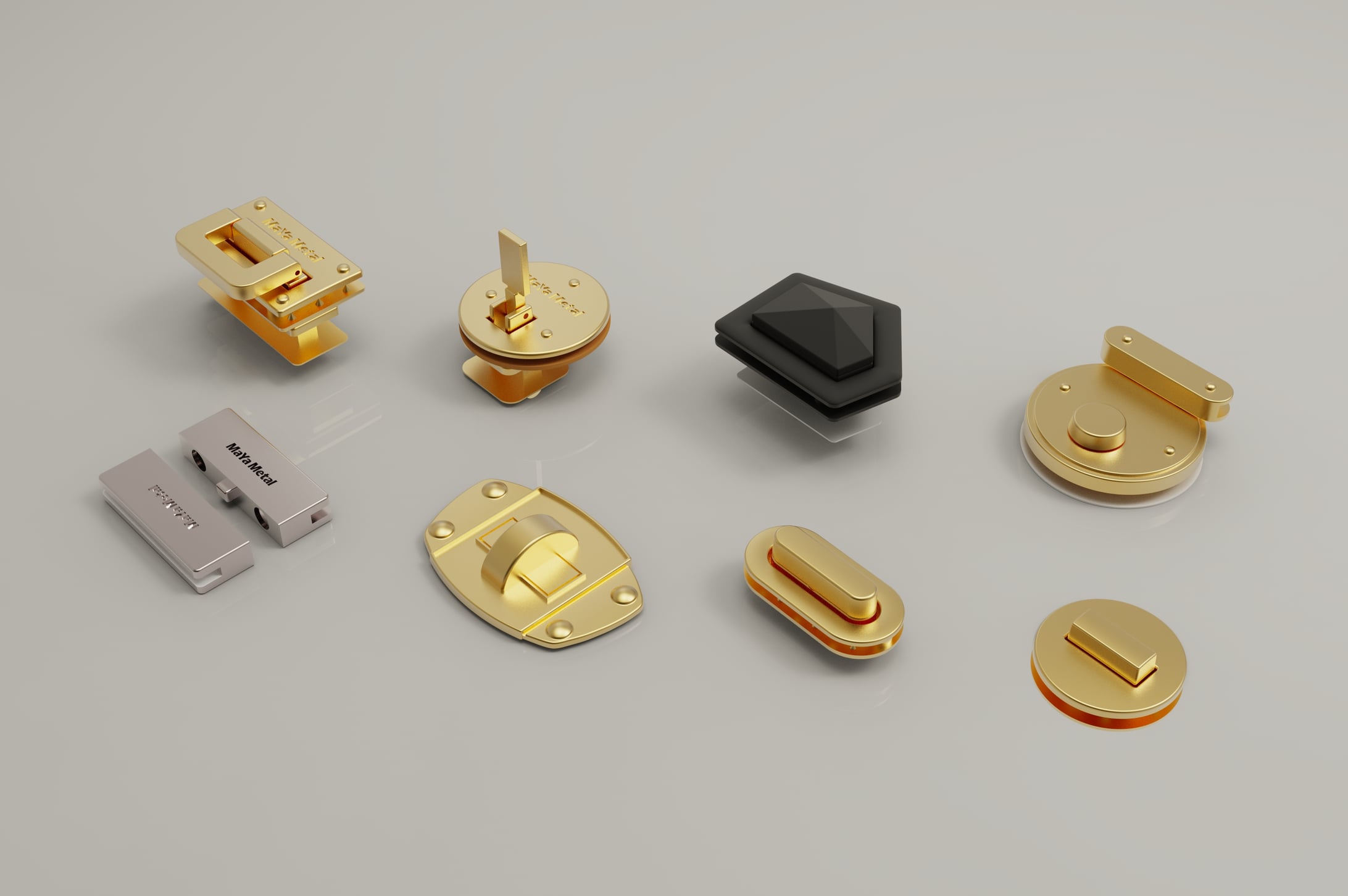
What Is Handbag Hardware?
Handbag hardware is the set of metal components fitted to a bag that perform a mechanical or visual function. Some parts carry load, such as D rings for straps and handles and hooks that connect straps. Some parts control closure, such as locks and magnetic fasteners. Others are mainly decorative, such as logo plates, chains and ornamental feet.
For buyers and designers, hardware is not a single product but a system. A well-developed bag uses hardware that matches in material, finish color, scale and quality level. Mixing unmatched parts is one of the most common reasons a sample bag looks "almost right" but fails approval.
Main Handbag Hardware Categories
| Category | Function | Common Examples |
|---|---|---|
| Closure hardware | Opens and closes the bag | Bag locks, turn locks, magnetic snaps, zippers |
| Attachment hardware | Connects straps and handles | D rings, O rings, snap hooks, swivel hooks |
| Adjustment hardware | Changes strap length or fit | Sliders, loops, buckles |
| Carrying hardware | Forms handles or shoulder straps | Chains, chain connectors |
| Protection hardware | Protects the bag body | Bag feet, studs, corner protectors |
| Branding hardware | Carries logo and identity | Logo plates, engraved tags, zipper pullers |
Each category has its own engineering requirements. A lock needs reliable movement and assembly fit. A D ring needs the correct inside width for the strap. A chain needs comfortable weight and smooth links. Buyers should source categories together when they appear on the same bag so finish and quality stay consistent.
Functional Hardware vs Decorative Hardware
Functional hardware performs a mechanical job: closing, attaching, adjusting or protecting. Functional parts must be checked for movement, strength, clearance and edge quality, because weak handbag locks and closures or a stiff hook become customer complaints after sale.
Decorative hardware primarily carries visual identity: logo plates, decorative chains, ornamental studs and engraved details. Decorative parts still need quality control, but the priority shifts to surface appearance, logo accuracy and finish matching.
Many parts sit between the two. A branded bag lock, for example, must look premium and work smoothly at the same time. When briefing a manufacturer, buyers should state which parts are load-bearing, which are decorative and which must do both, because this affects material choice, structure review and inspection criteria.
Material Choices
The two materials Maya Metal works with are stainless steel and brass. Stainless steel is often chosen for corrosion resistance, strength and long product life, and is well suited to D rings, hooks, buckles and exposed hardware. Brass is often chosen for premium weight, warm feel and polishability, and is well suited to locks, decorative buckles, bag feet and visible luxury details.
Material choice should follow part function. Load-bearing strap hardware benefits from stainless steel strength. A heavy front lock may benefit from brass weight and finish depth. Buyers should also consider how the material interacts with the chosen finish, since plating, polishing and PVD behave differently on each base metal.
Surface Finish Choices
Common handbag hardware finishes include polished, brushed, electroplated gold-tone or nickel-tone, gunmetal, antique effects, matte black and PVD colors. Finish affects color, corrosion resistance, scratch visibility and perceived quality.
The critical buyer rule is consistency across the full hardware set. Locks, rings, hooks, chains, feet and buckles on one bag should be compared together under the same lighting before production. Physical metal samples should always be approved before mass production, because screen images and verbal descriptions cannot define a metal color.
How to Prepare an RFQ
A strong RFQ for custom handbag hardware should include drawings or physical samples, product photos, target material, finish reference, key dimensions, logo artwork, quantity, target date and any testing or packing requirements; see our custom hardware RFQ guide for a full checklist. For moving parts such as locks and swivel hooks, the RFQ should also describe the expected function and installation method.
Clear RFQ details allow the manufacturer to quote MOQ, cost, sample time and production lead time more accurately. MOQ depends on product type, material, finish, tooling and quantity, and lead time is confirmed after drawing review and sample requirements. Vague RFQs create vague quotes, so buyers should invest the time upfront.

