
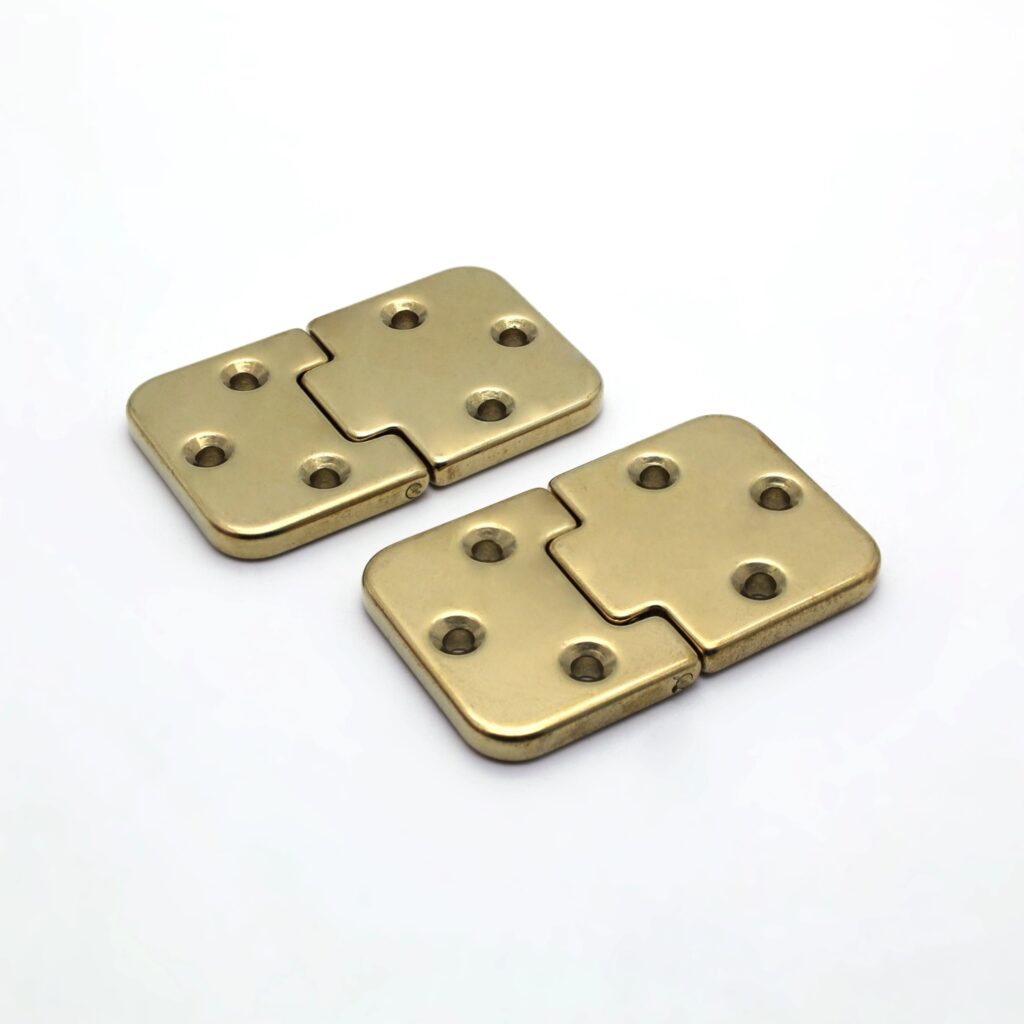
"Brass buckle" is one of the most abused phrases in the hardware trade. A buckle can be machined from solid brass — or cast from cheap zinc or iron and given a thin brass-colored plating that rubs off within months. The two look identical in a product photo. This guide shows you how to tell them apart before your customers do.
Why It Matters
Solid brass buckles age gracefully: the metal develops a warm patina, scratches blend in, and the part lasts decades. Brass-plated buckles age badly: the plating wears through at friction points, the grey base metal shows, and corrosion follows. For a brand, that difference shows up directly in reviews and return rates.
Five Ways to Tell Solid Brass from Brass-Plated
1. Check the Weight
Brass is dense (about 8.5 g/cm³). A solid brass buckle feels noticeably heavy for its size. Zinc alloy runs lighter, and iron/steel plated to look like brass feels different again. Weight alone is not proof, but a suspiciously light "brass" buckle is a red flag.
2. The Magnet Test
Brass is non-magnetic. If a buckle sticks to a magnet, it is plated steel or iron — full stop. Note that zinc alloy is also non-magnetic, so passing the magnet test does not prove brass; it only eliminates the cheapest fakes.
3. Look at the Edges and Drill Holes
Plating is thinnest — and first to fail — at sharp edges, pin holes and the tongue rest. Examine these spots under bright light: a different color or a greyish tone at the edges means plated base metal. On solid brass, every freshly exposed surface is the same warm yellow-gold all the way through.
4. The Scratch Test
On a hidden face (the back of the buckle), make a small scratch with a file or scribe. Solid brass shows bright yellow metal under the scratch. Plated zinc shows silvery grey; plated iron shows dark grey. Suppliers of genuine solid brass will not object to this test.
5. Ask for XRF or a Material Certificate
For production volumes, skip the guesswork: a handheld XRF analyzer reads the alloy composition in seconds, and any serious manufacturer can provide material certificates (CuZn39Pb3, H62, H65 and similar brass grades) with each batch.
When Each Option Makes Sense
| Scenario | Recommended Choice |
|---|---|
| Heritage, premium and leather-goods brands | Solid brass |
| Buckles with antique/vintage finishes | Solid brass (finish penetrates the metal) |
| Price-driven fashion, short product life | Brass-plated zinc |
| Large sculptural buckles (cost & weight limits) | Brass-plated zinc, honestly specified |
The honest version of the trade: plated zinc is a legitimate choice for fast fashion — as long as it is specified and priced as such. Problems start when plated hardware is sold, or sourced, as "brass".
Sourcing Solid Brass Buckles
When requesting quotes, specify the grade (H62/H65 brass is common for buckles), ask whether parts are machined, stamped or forged, and request a material certificate with the first article inspection. A supplier who hesitates at any of these is telling you something.
Maya Metal produces belt buckles and bag fittings in solid brass and stainless steel, with material certificates available for every batch. See our materials page or request a quote.

