
Case Fittings at a Glance
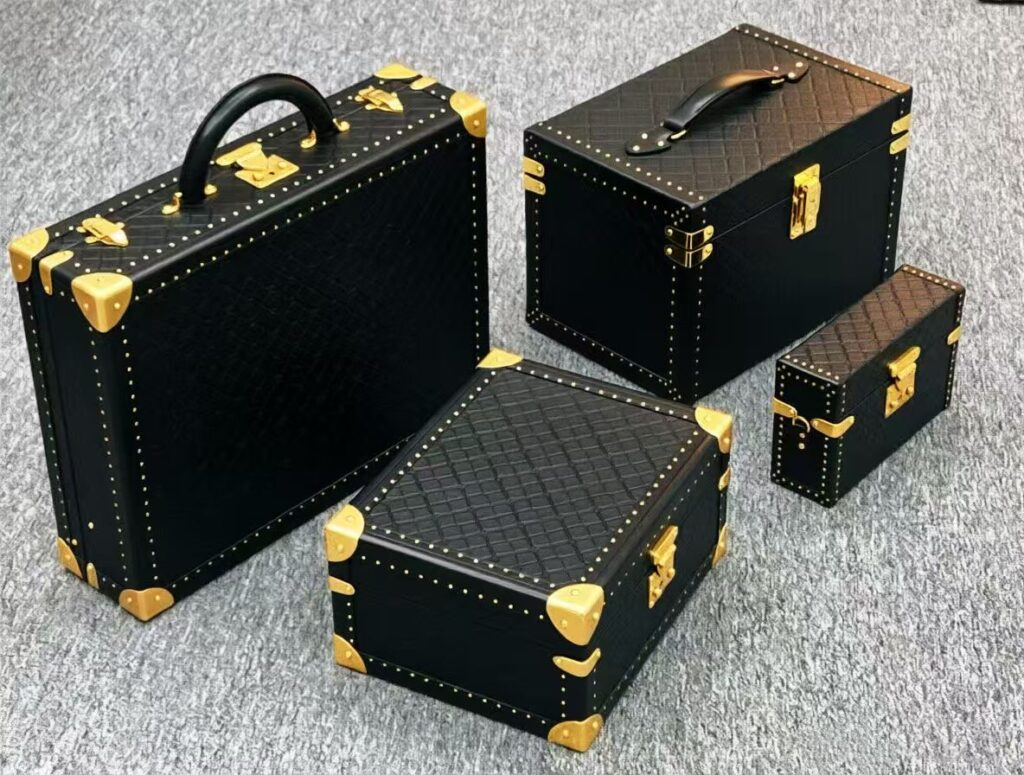
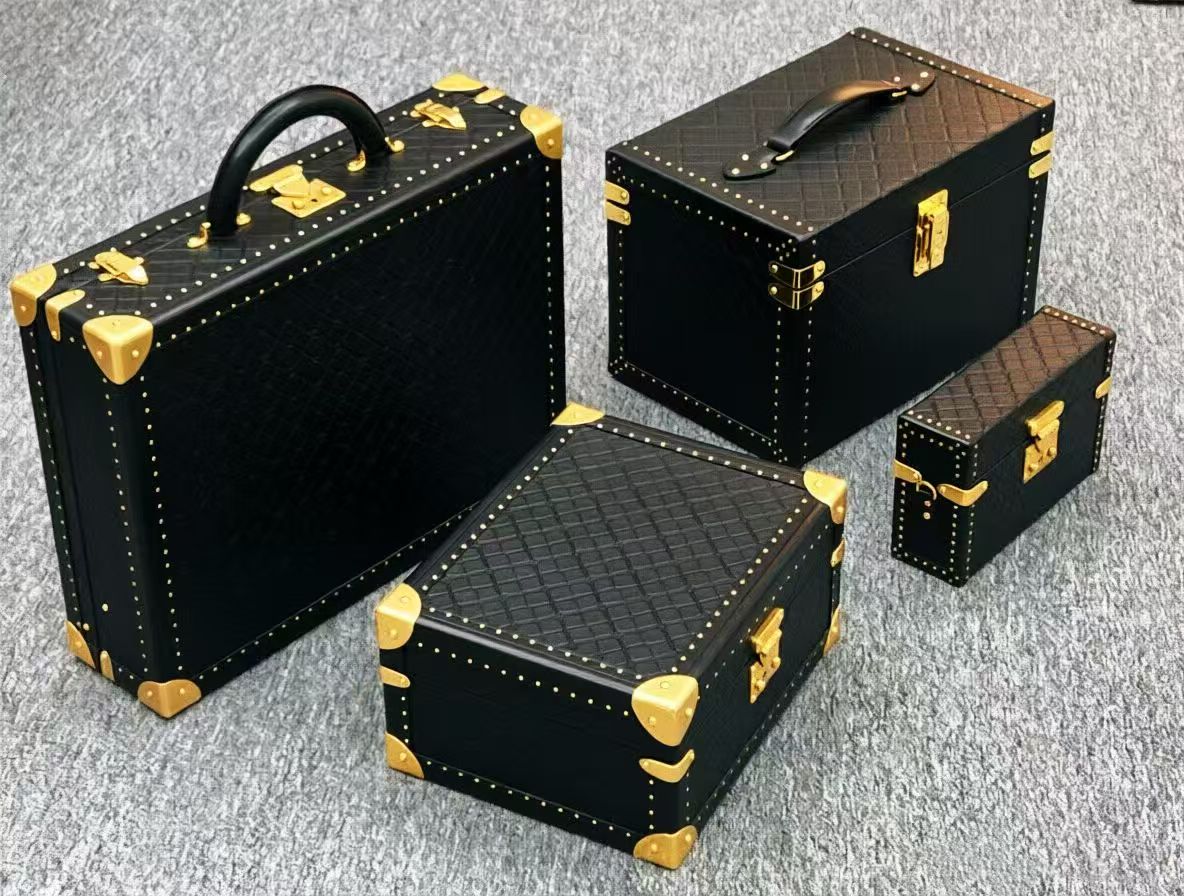
Luggage handle hardware covers the metal fittings a case is carried and wheeled by — telescopic trolley handle fittings, top and side carry handles, and the brackets that mount them — while case corner protectors (metal case corners) are the armor caps that take impacts on the eight corners of a trunk, briefcase or equipment case. The standard materials are steel, stainless steel, brass and zinc alloy, finished to match the case’s locks and latches. Specify fittings by load rating, mounting footprint, finish and corrosion resistance, and approve physical samples before production. Maya Metal manufactures trunk and case hardware — handles, corners, latches and hinges — as matched sets for luggage and case makers.
What Handle Hardware Does a Case Actually Need?
A typical hard case carries three handle systems, and each has its own failure mode:
- Telescopic trolley handle fittings — the tubes, push-button mechanism and mounting brackets of the wheel-out handle. This is the highest-stress fitting on a rolling case: buyers rate it by extension cycles (commonly 3,000–5,000 cycles minimum), wobble tolerance and tube wall thickness
- Carry handles — drop handles that fold flat against the case, and strap handles over a metal core. Drop handles need sprung or damped returns so they do not slap the shell; the mounting plate spreads load into the case wall
- End grips and strap attachments — D-rings, loops and brackets that anchor shoulder straps; sized by webbing width and pull load, the same logic as bag hardware
What Do Case Corner Protectors Do?
Metal case corners serve three jobs at once: they absorb drop impact at the case’s most vulnerable points, they stiffen the corner joint where two or three panels meet, and they define the case’s visual character — ball corners read vintage trunk, flat wraparound corners read industrial equipment case.
The main constructions:
- Ball corners — three-way rounded caps, usually steel or brass, classic on trunks and flight-style cases
- Flat or wraparound corners — folded steel or brass strips that cap the corner edges; the workhorse of equipment and instrument cases
- Cast decorative corners — zinc alloy die castings with relief detail for premium trunks and retro luggage; see our die casting vs. stamping guide for when casting beats folding
Attachment is by rivets or screws through pre-punched holes; specify hole pattern and rivet size to match your panel thickness and assembly line.
Which Materials and Finishes Survive Case Duty?
- Steel, chrome or zinc plated — the value standard for corners and brackets; strong and cheap, but plating quality decides rust resistance
- Stainless steel — the no-corrosion choice for marine, outdoor and premium programs; higher cost, no plating to fail
- Brass — traditional trunk hardware material; takes polished, antique and lacquered finishes that define heritage styling
- Zinc alloy die castings — sculpted shapes and logos at low unit cost; needs a sound plating stack, so tie corrosion requirements to a salt spray specification
Whatever the material, finish the handles, corners, latches and hinges in one batch or against a master sample — mixed-tone hardware is the fastest way to make a case look cheap. And where a case has a weight budget, trolley fittings and corners are legitimate lightening targets; see our hardware weight reduction guide for where cutting weight is safe and where it is not.
What Specs Matter When Sourcing Case Fittings?
- Load and cycle ratings — trolley handle pull load, extension cycles and lateral wobble; carry handle static load with a safety factor of 4× or better on the packed case weight
- Mounting footprint — plate dimensions, hole pattern and screw or rivet spec matched to your panel material and thickness
- Tube and wire gauges — trolley tube diameter and wall thickness; handle bail wire diameter by load
- Finish and color match — one finish standard across handles, corners, latches and hinges, referenced to a physical master
- Corrosion testing — salt spray hours by market tier, written into the PO, on the production finish
- Edge quality — every surface a hand touches deburred and smooth, checked on the actual production sample
How Do MOQ and Customization Work for Case Fittings?
Standard corners, handles and brackets are catalog items with low minimums — the practical route for small runs and new case lines. Custom shapes, branded castings or matched proprietary sets mean tooling: stamping dies for folded corners, die-casting molds for sculpted parts, with first samples typically in two to four weeks and production minimums in the low thousands. If you are still choosing a manufacturing partner, our luggage hardware manufacturer guide covers the evaluation criteria in detail.
Case Fittings Sourcing Checklist
Before approving luggage handle hardware and case corners for production, check:
- Trolley handle cycle-test results and wobble measured on the actual fitting, not a datasheet claim
- Carry handle mounting plates load-tested to 4× packed case weight, with the return action checked for slap
- Corner hole patterns and rivet specs confirmed against your panel thickness on a sample corner joint
- Finish match across handles, corners, latches and hinges under daylight, against the master sample
- Salt spray requirements written per component group, tested on production-finish samples
- Hand-touch surfaces deburred, verified by running a finger over every handle grip and corner edge
Send us your case drawings, target loads and quantities — our team will recommend standard or custom fittings, quote tooling where needed and produce matched sample sets of handles, corners, latches and hinges for your cases.

