
Casting or Stamping? The Short Version
Most metal bag hardware is made one of two ways: die casting injects molten zinc alloy into a steel mold, producing complex three-dimensional shapes — logo plates, decorative locks, sculpted pullers — at low unit cost once tooling exists. Stamping presses sheet brass or stainless steel into shape with dies, producing flatter, stronger parts — D-rings, plates, clips — with crisper detail and better material properties. The process decision drives your part’s strength, surface quality, tooling budget and minimum order quantity. Maya Metal runs both processes in-house for custom handbag hardware and recommends the route per component at quoting stage.
How Does Die Casting Work for Bag Hardware?
In die casting, zinc alloy is melted at around 400 °C and injected under pressure into a hardened steel mold. The metal freezes in seconds, capturing whatever geometry the mold cavity holds: deep relief logos, curved lock bodies, hollow-backed decorative shapes that would be impossible or uneconomic to machine. One mold produces thousands of identical parts per shift.
The trade-offs are inherent to the process and material. Cast surfaces carry a slight texture and can hold micro-porosity, which plating must be managed to cover — an experienced plater blasts and copper-fills before the final finish. Zinc alloy itself is weaker than brass or steel and will bend rather than spring back under overload, so cast parts are designed with generous cross-sections at stress points. Tooling runs from weeks and a meaningful budget, which is why die casting makes sense from a few thousand pieces upward.
How Does Stamping Work, and Where Does It Win?
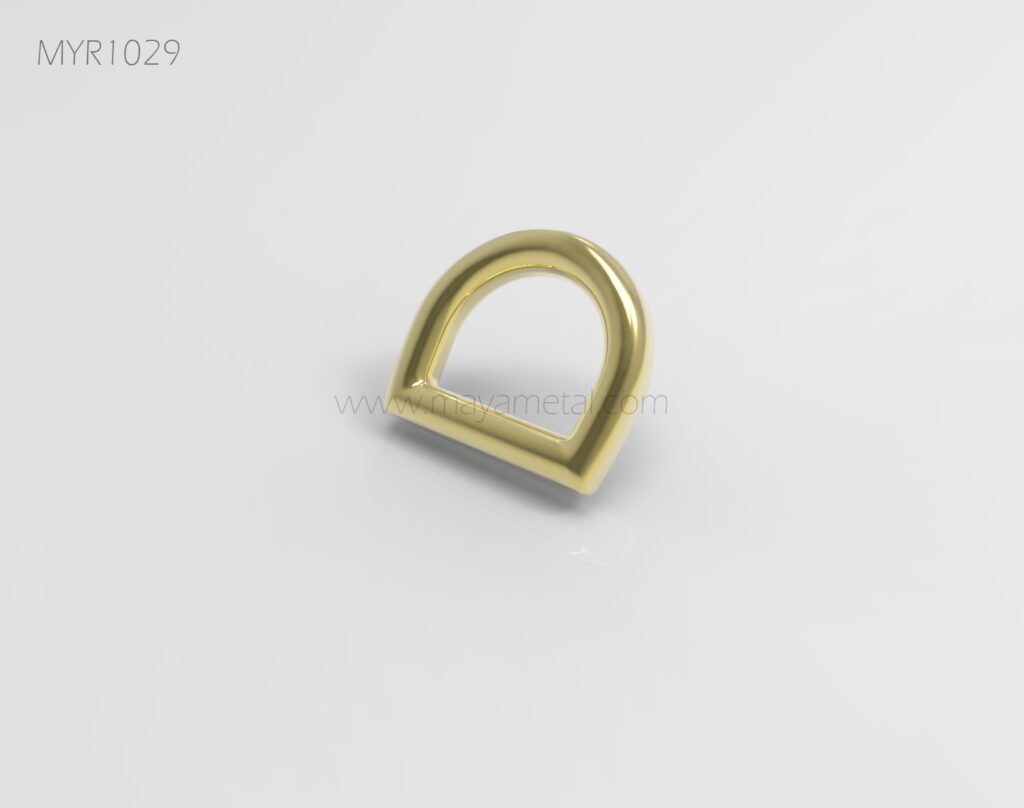
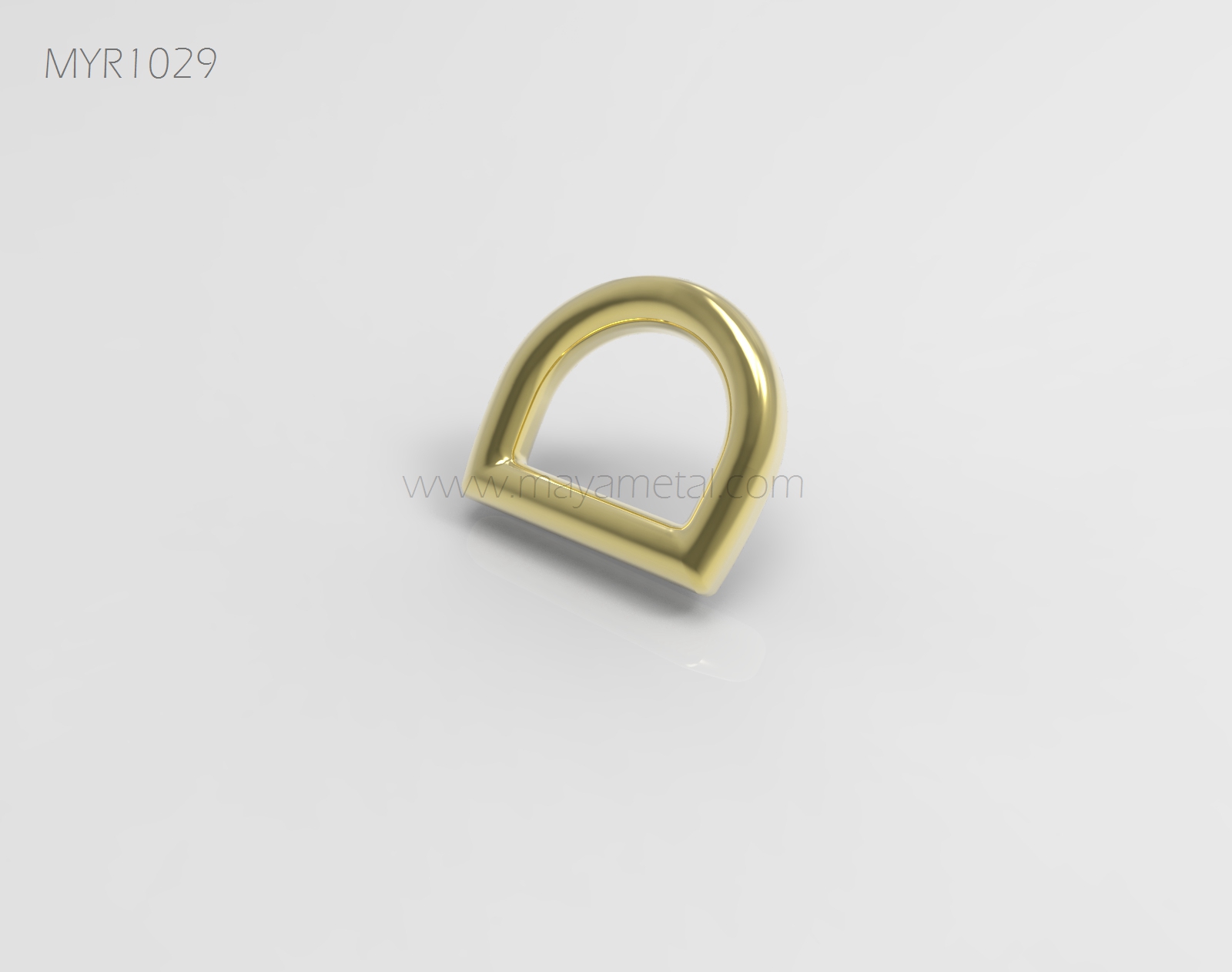
Stamping starts from rolled sheet — typically brass or stainless steel — and uses a press with hardened dies to blank, bend, draw and emboss the part. A D-ring frame, a flat logo plate, a money clip or a simple buckle frame are classic stamping jobs. Progressive dies run multiple operations in sequence, so complex flat-ish parts still come off the press at high speed.
Stamped parts keep the full strength of wrought sheet metal: a stamped brass ring flexes under load where a cast zinc ring would crack. Edges are crisp, embossed detail is sharp, and the dense surface takes polishing and plating beautifully. The limits are geometric — stamping cannot produce deep three-dimensional sculpting or hollow forms without assembling multiple pieces — and very thick sections become uneconomic to press.
Which Process Suits Which Component?
- Die casting — turn lock bodies, sculpted zipper pullers, 3D logo emblems, decorative corners, novelty shapes, anything with deep relief or curves in three axes
- Stamping — D-rings and O-rings, flat logo plates and tags, clips, slides, simple buckle frames, thin embossed badges
- Hybrid assemblies — many premium locks combine both: a cast decorative body with stamped or machined internal mechanism parts, where strength and precision matter
- Special cases — chains are formed from wire on dedicated machines; solid brass statement buckles are often gravity-cast or CNC-machined rather than die-cast, because brass needs higher casting temperatures than zinc die-casting machines handle
What Does the Process Choice Do to Cost, MOQ and Lead Time?
Die casting tooling is the larger investment — a multi-cavity hardened steel mold built to survive injection pressures — but unit prices drop steeply with volume, so casting wins on complex parts from mid quantities upward. Stamping dies are generally cheaper and faster to build, and for simple blanks a factory may even start with wire-cut soft tooling for sampling, so stamped parts often carry lower minimums and shorter sampling cycles.
Finishing cost interacts with the process too: cast zinc needs more surface preparation before plating, while stamped brass can often go straight to polishing. When comparing quotes, compare the finished-part price, not the blank price. For how a full custom program flows from drawing to production, see our guide to how custom bag hardware is manufactured.
How Should You Brief a Factory on Process?
You rarely need to dictate the process — but you should give the factory the information that determines it:
- 3D files or samples — geometry decides feasibility; a STEP file lets engineers flag undercuts and thin walls before tooling (we manufacture directly from STEP files)
- Load expectations — strap rings and clasps need wrought-metal strength; decorative plates do not, and casting them saves money
- Target quantity — volume is what tips the tooling math toward die casting
- Finish target — high-polish gold over cast zinc needs the right plating stack; say the finish up front, not after tooling
- Weight limits — zinc casts denser than it looks; if the bag has a hardware weight budget, state it
Process Choice: Final Checks Before the PO
Before approving a construction route for a custom component, check:
- The factory has stated the process per component, with reasoning — not just a price
- Cast parts have adequate wall thickness at stress points, and cast zinc is not used for load-bearing rings or clasps
- Plating samples on the actual cast or stamped substrate, since surface preparation differs by process
- Tooling ownership, lifetime and per-cavity output are written into the agreement
- Unit price is compared at your real volume tiers, including finishing — not at blank cost
- For hybrid locks and clasps, the mechanism parts are specified in wrought or machined metal, not cast zinc
Send us your drawings, samples or even a sketch with target quantities — our engineers will recommend casting, stamping or a hybrid per component, flag geometry risks before tooling, and quote the full route from mold to finished, plated part.

